
Asplenia
Splenectomy is associated with fulminant bacterial infection. The risk is long-term but is highest in the first two years after splenectomy.
- Vaccination, patient education and antibacterial prophylaxis are indicated.
- Functional hyposplenia is associated with medical conditions such as sickle cell disease.
- Antibiotics must be given promptly if a patient with asplenia or functional hyposplenia presents with signs or symptoms of infection.
Immunisation
All patients with an absent or dysfunctional spleen should be fully vaccinated in accordance to the national schedule found HERE
Vaccination against pneumococcal infection is recommended for all individuals who have/are at high risk of developing splenic dysfunction (including coeliac disease) in the future.
Vaccines should be administered at least 2 weeks before OR if this is not possible 2 weeks after splenectomy/diagnosis (typically given at the GP surgery). Vaccines can be given in hospital if admission lasts longer than 2 weeks.
- Patients with splenic dysfunction should receive boosters of pneumococcal conjugate vaccine (PCV20) at five-yearly intervals.
- All patients aged over 6 months should be given influenza vaccine annually via their GP.
Recommended vaccinations for asplenia/functional hyposplenia in paediatrics:
|
Patient age at first diagnosis |
Vaccination |
|
Less than 1 year
|
Children should be fully immunised according to the national schedule, and should also receive: Additional vaccination against meningococcal groups:
Additional vaccination against pneumococcal infection:
Influenza vaccination:
|
|
12-23 months
|
If not yet administered, give the routine vaccines due at 1 year of age (Hib/MenC, PCV13, MMRV and MenB vaccines) PLUS: Additional vaccination against meningococcal groups:
Additional vaccination against pneumococcal infection:
Influenza vaccination:
|
|
2 years to 9 years
|
Ensure children are immunised according to national schedule, and they should also receive: Additional vaccination against meningococcal groups:
Additional vaccination against pneumococcal infection:
Influenza vaccination:
|
|
10 years or more
|
Older children should receive the following (regardless of previous vaccination): Additional vaccination against meningococcal groups:
Additional vaccination against pneumococcal infection:
Influenza vaccination:
|
|
Vaccine terminology:
|
|
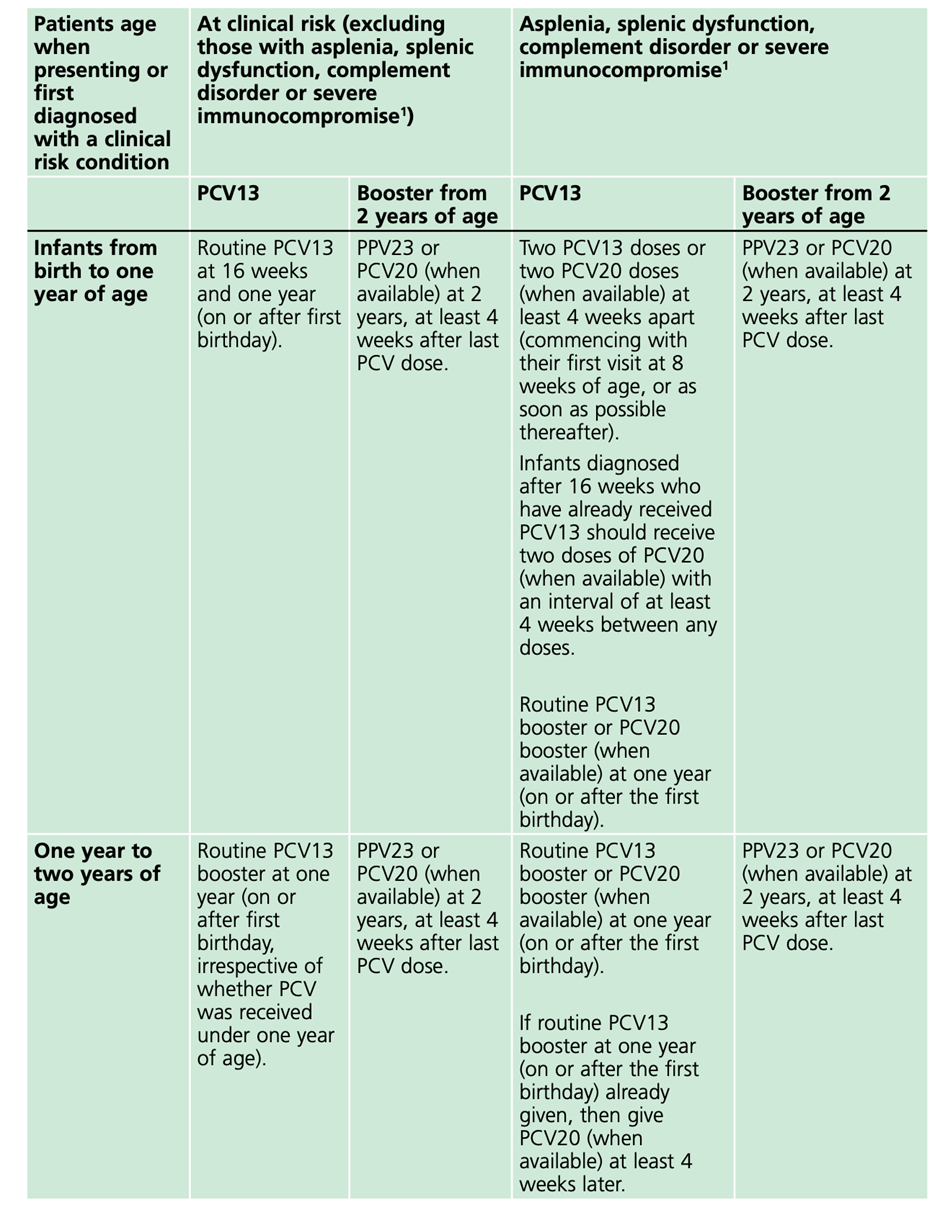
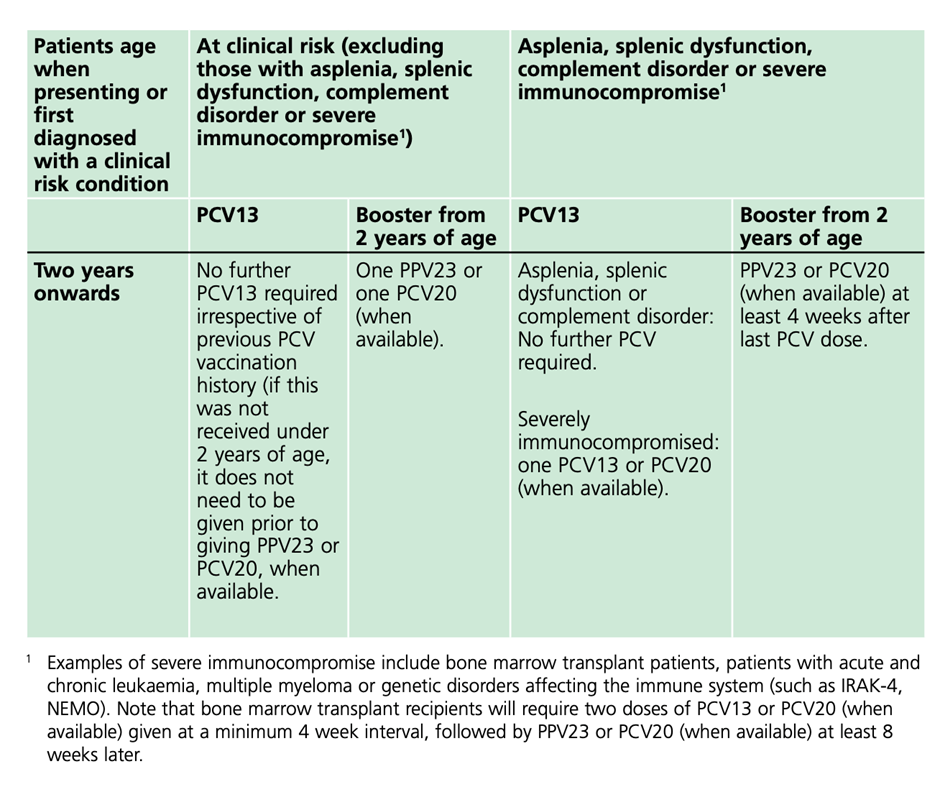
*Additional vaccination against pneumococcal infection:
See images from Green Book below. Note OUH uses PCV20 pneumococcal vaccine (PPV23 is no longer manufactured)
Prophylactic antibiotics
Patients are to start prophylactic antibiotics as soon as functional hyposplenia is diagnosed or immediately following splenectomy and should be continued into adulthood. At this point the ongoing need for antibiotic prophylaxis should be reviewed by the adult team.
|
Preferred prophylactic antibiotic |
|
|
1 month - 11 months |
phenoxymethyl penicillin (penicillin V) 62.5mg po BD |
|
1 year - 4 years |
phenoxymethyl penicillin (penicillin V) 125mg po BD |
|
5 years - 17 years |
phenoxymethyl penicillin (penicillin V) 250mg po BD |
|
Alternative prophylactic antibiotic (penicillin allergy) |
|
|
1 month - 23 months |
erythromycin 125mg po BD |
|
2 years - 7 years |
erythromycin 250mg po BD |
|
8 years - 17 years |
erythromycin 500mg po BD |
Rescue pack antibiotics
Patients are to be provided with a treatment course of antibiotics (for example 3 days course of amoxicillin or clarithromycin in case of penicillin allergy) to start immediately if they have signs or symptoms of infection. The patient should start this treatment and their GP or hospital team should be informed immediately.
Prophylactic antibiotics should be held while patient is receiving treatment dose of an antibiotic that also provides cover for pneumococcal bacteria (discuss with pharmacy if in doubt).
Patient Education
Parents/carers can be directed to the information leaflet and an alert card. Parents/carers may wish to invest in a pendant or bracelet.
Travel
Individuals travelling abroad should carry a treatment course of antibiotics with them, to commence immediately if they develop any signs of infection. When prescribing antibiotics, it is important to consider pneumococcal resistance in certain countries. Those who are not routinely taking prophylactic antibiotics should do so when travelling.
When travel is to malaria endemic countries, individuals need to be advised about the consequences of developing malaria. They should take antimalarial prophylaxis and avoid mosquito bites (wear long trousers and long sleeves, use insect repellent creams, use mosquito nets or screens).
Animal bites
Individuals should seek prompt medical attention if they sustain an animal bite that has broken the skin and drawn blood (dog and cat bites are of high risk due to the possibility of transmitting C.canimorsus, which can be fatal).
See Bites, animal/human/insects for management.
References
- Public Health England. Immunisation of immunocompromised individuals. In: Immunisation Against Infectious Disease (The Green Book). Chapter 7. Available from: https://www.gov.uk/government/publications/immunisation-of-immunocompromised-individuals-the-green-book-chapter-7
- British National Formulary for Children. Vaccination – General Principles [Internet]. NICE; [cited 2025 Jul 8]. Available from: https://bnfc.nice.org.uk/treatment-summaries/vaccination-general-principles/